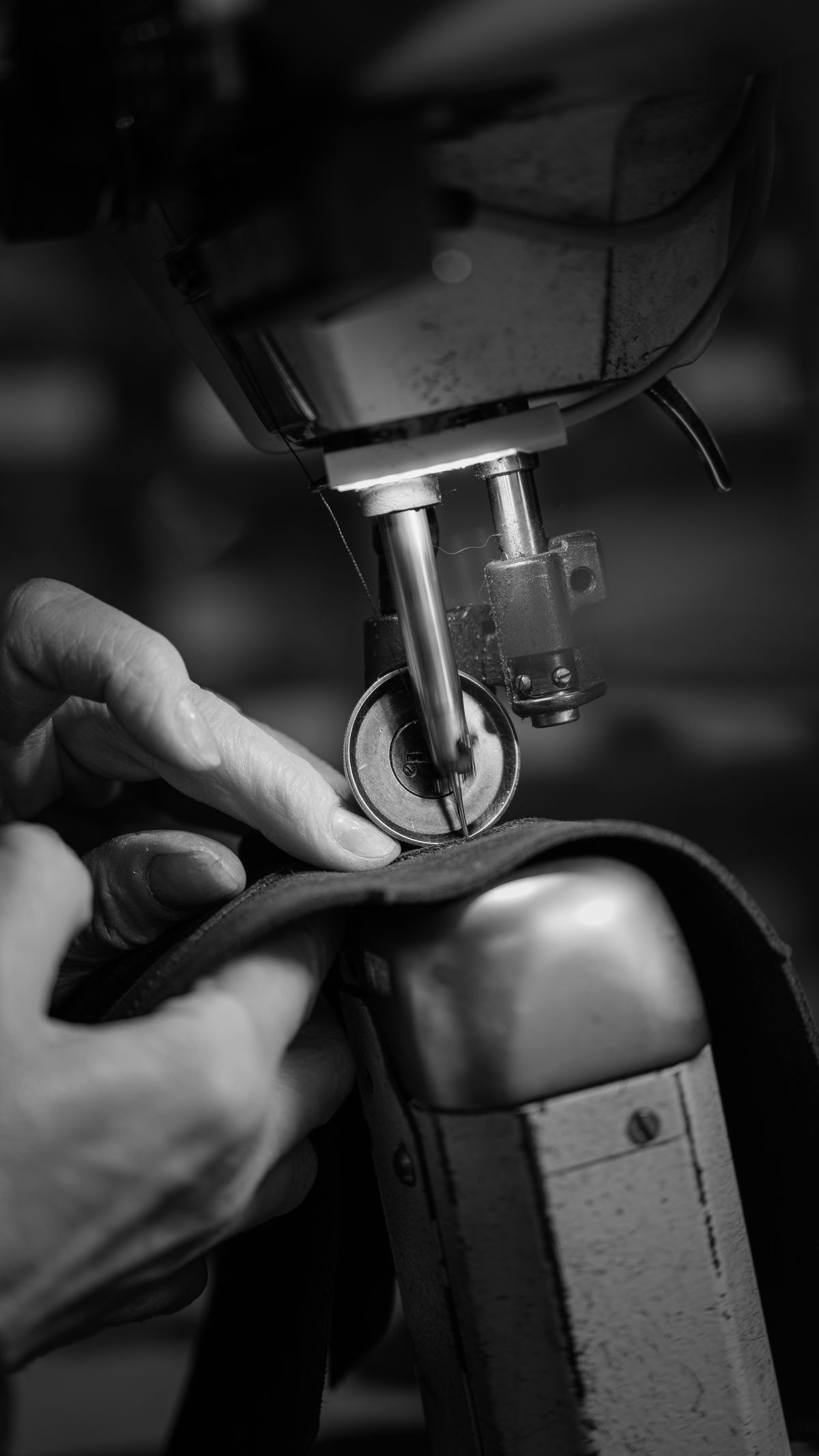
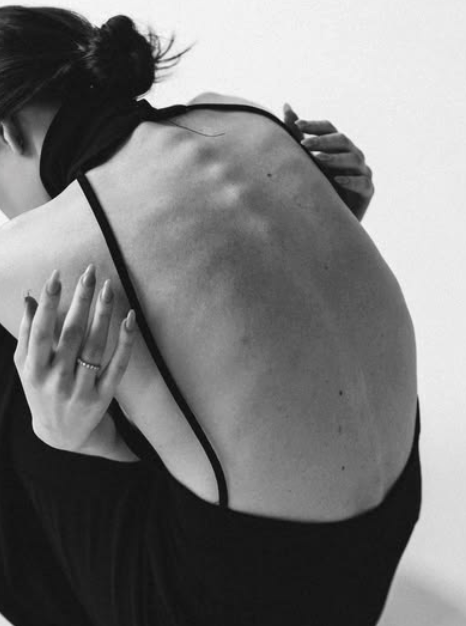
KYVALI makes sculptural leather pieces that structure the body. Each object is cut, moulded and stitched by hand — worn not as ornament, but as anatomy.
Every KYVALI piece is made in a small atelier in Tokyo, where a single leather artisan carries each object from hide to finished form — cutting, moulding, burnishing and stitching one piece at a time. Nothing is outsourced, and nothing leaves the workshop until it has passed through the same hands that began it.
This is deliberately slow work. A single corset can take days of cutting, wetting, shaping and stitching before it holds its final form — time we consider part of the object's value, not a delay in producing it.
Before a single pattern is drawn, our designer studies anatomy and architecture side by side — how bone carries load, how a vault distributes weight, how a joint articulates without breaking its line. Each KYVALI piece takes its name and structure from this study: TARSUS, COXA, ALULA are the joints and forms a silhouette is built from.
Many of the curves and proportions come directly from nature — the taper of a wing bone, the spiral of a shell, the bracing of a ribcage. We treat these as engineering references as much as aesthetic ones, translated into leather that has to hold its shape against a moving body.